

Retail promotions: 5 rules to deploy AI and Automation safely and accelerate ROI
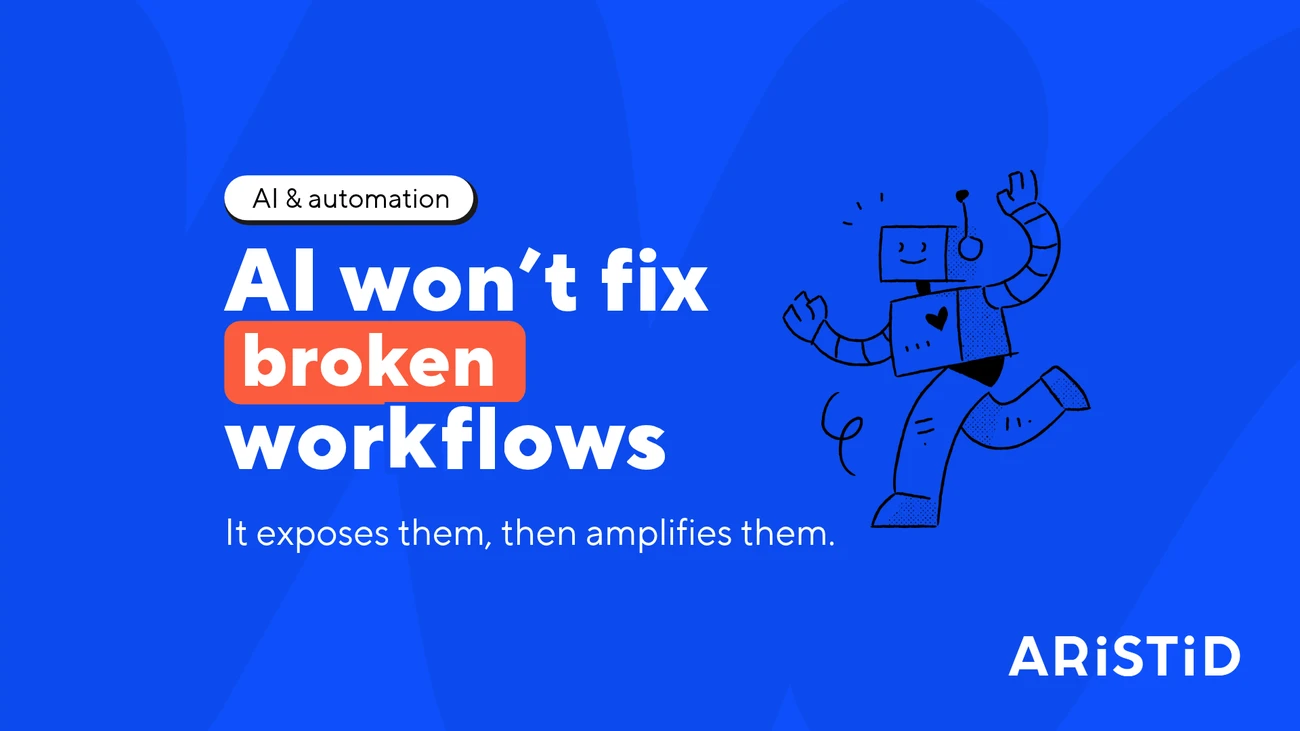
Retailers are rushing to deploy AI and automation to accelerate and shorten promotional cycles, multiply the number of promotions, add millions of personalization variables, and automate content across every e-commerce and social media channel. But deploying AI and automation on broken workflows and messy, fragmented data brings real technical and financial risk.
Here are 5 rules to safely deploy AI and automation in retail promotions and accelerate ROI.
1. Unify collaboration and eliminate fragmentation
Deploying AI and automation won't fix disconnected teams and fragmented production tools. Traditionally, siloed internal retail teams, studios and agencies still work in separate tools, exchanging feedback through emails, PDFs and screenshots. Those teams must also coordinate omnichannel assets without the help of a unified environment.
A typical retail ecosystem involves 50 to 100 external partners, each with their own workflows. Fragmentation and fragility become exponential.
For this reason, implementing AI and automation in retail promotion also requires rethinking collaboration tools and practices. The solution: a unified platform shared by retailers and their agencies.
2. Switch from a manual logic to an industrialized production logic
AI and automation increase the volume and variety of assets that can be created during a promotion cycle. This volume and speed of execution also make it humanly impossible to do manual variations, changes and corrections in that same time cycle.
That's why before implementing automation or AI, retailers need structured ads and marketing templates. Rules must be encoded — in price blocks, layouts, typography, legal mentions — to turn promotion asset production from a manual logic into an industrialized production logic.
Without AI, it takes 1 to 3 days to turn around digital ad sets, typically 5 to 10 formats with copy or language variations. Endless corrections make this process incompatible with weekly retail cycles.
Shifting from manual marketing and ad production to automated production is not just a cultural gap. It requires high-quality output, building trust from users, and systems that identify and correct mistakes quickly.
3. Simplify validation workflows for promotions
Retailers should apply this same industrialization logic to approvals and corrections workflows. Because AI and automation accelerate output, productivity gains won't materialize if your validation process still relies on old manual tasks.
Promotions approvals will still get stuck in the same bottlenecks: unclear decision rights, slow validation cycles, and feedback buried in someone's inbox.
AI and automation accelerate what exists, including the bottlenecks and the flawed processes. AI doesn't fix broken processes. It exposes them. Then, it amplifies them.
4. Centralize and structure your promotional data in one place
Retailers need to make sure they can trust their product, pricing and legal data before implementing any AI or automation, because those technologies will accelerate errors instead of fixing them. Wrong prices, inconsistent offers, missing legal mentions and off-brand content reach customers faster and at greater scale, damaging trust and satisfaction.
And because promotions are regulated and margin-sensitive, these amplified mistakes can trigger real financial losses. Retailers are also at risk of compliance breaches and contractual disputes that far outweigh any productivity gains AI was meant to deliver.
With a Data Hub, promotional data is centralized and structured in one place. Your data is governed, traceable, and can be trusted.
5. Establish governance and traceability before scaling automation and AI
As AI and automation generate more promotional variations, more channels and more localized campaigns, maintaining control becomes increasingly difficult. Retailers need to know where promotional data comes from, how it has been modified, and who approved it before publication.
Without clear governance, AI can create uncertainty rather than efficiency. Teams spend time questioning the validity of product information, checking versions and investigating errors instead of accelerating execution.
Before scaling AI across retail promotions, retailers should establish clear ownership, permissions, validation rules and change tracking. Every stakeholder, from marketing teams to agencies and local stores, must work within a controlled framework where processes remain transparent and auditable.
This governance layer ensures that automation and AI are reliable and generate productivity gains. Speed and safety of operations can only exist with trusted data, controlled workflows, and complete traceability across the promotional chain.
How ARISTID helps retailers adopt AI and automation
Retailers who want to unlock the full value of AI and automation should first check that they have solid underlying workflows, data, templates, approvals and creative systems. This is where ARISTID's promotional data and creative factory platform makes the difference.
Behind the scenes for over 30 years, ARISTID helps retailers navigate complexity, from print to omnichannel to AI, by connecting data, workflows and execution into one powerful platform. We help retailers rebuild the foundations first: clean promotional data, structured templates, encoded brand rules, industrialized creative production logic, and unified collaboration across agencies and internal teams.
Once these fundamentals are in place, AI and automation become safe, predictable and genuinely productive. ARISTID gives retailers a platform where AI can accelerate what works, not amplify what's broken. Together, we turn promotional operations into a modern, scalable and resilient engine for growth.
Discover how ARISTID Automation helps retailers transform operational complexity into a controlled framework, enabling faster, more reliable production across print, digital, in-store and local marketing assets.
Explore further
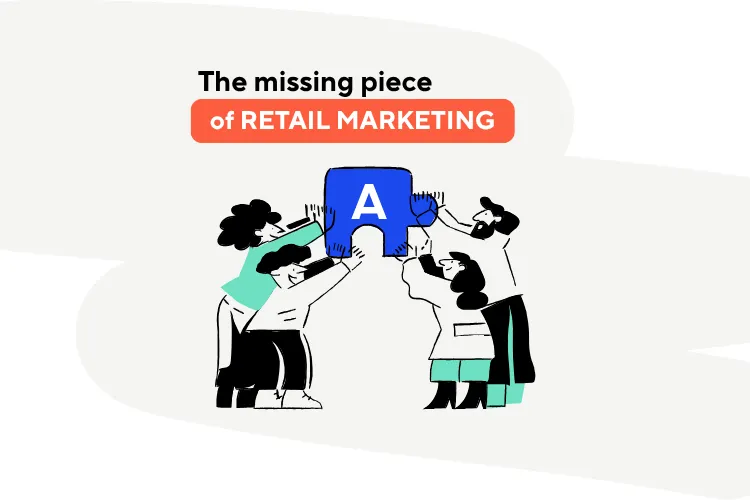
The martech & promotional data puzzle: Why retailers struggle to see the full picture
Retail organizations build the easy edge pieces of their martech stack first. ARISTID helps retailers connect the fragmented middle into one unified promotional ecosystem.
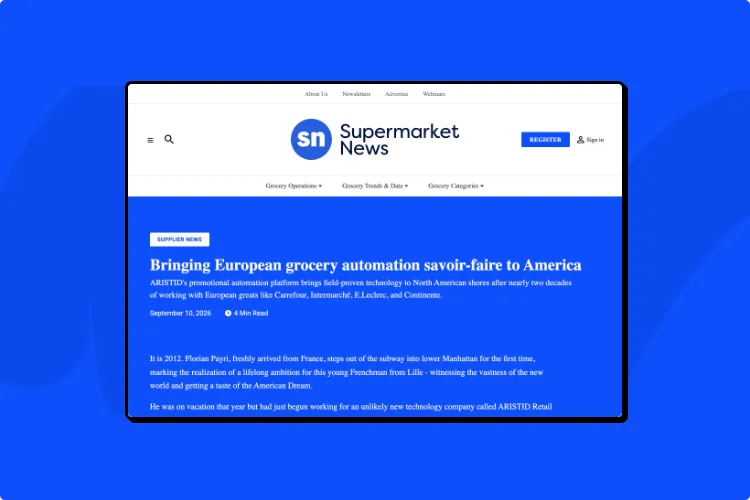
Bringing European grocery automation savoir-faire to America
Fourteen years after his first trip to New York, ARISTID Co-CEO Florian Payri reflects on the company's journey from a French pre-press agency to a promotional automation platform now expanding into North America, in an interview with Supermarket News.

ARISTID earns the trust of France’s leading sporting goods retailer, Intersport
INTERSPORT France, the country’s leading sporting goods retailer, has expanded its partnership with ARISTID after a successful first year of collaboration. By adopting ARISTID’s end-to-end promotional marketing platform, the retailer now manages promotional planning, content production, creative automation and campaign execution through a unified technology ecosystem. The partnership highlights how large retail networks can modernize promotional operations while improving efficiency, consistency and speed-to-market.

ARISTID 2026 retail trends report: The world’s most innovative retail concepts
9th edition of Rodolphe Bonnasse's world tour of retail: social shopping, AI, engagement and storytelling flagships.
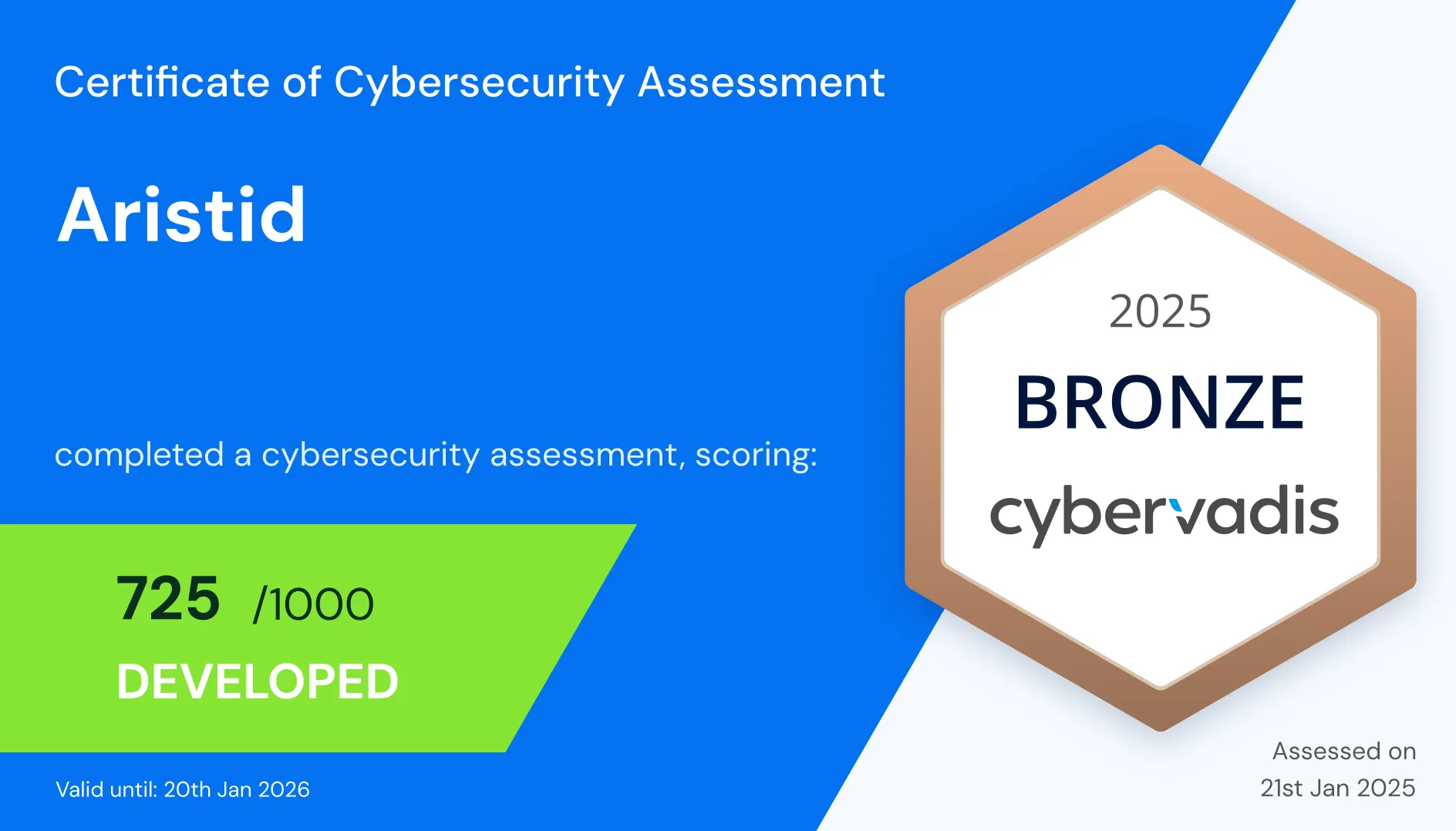
ARISTID achieves a Bronze score of 725 on CyberVadis
ARISTID earns a Bronze score of 725 on CyberVadis, recognising the robustness of its cybersecurity processes and controls.

Catalog digitalization guide 2.0 by Alliance Digitale
ARISTID contributes to Alliance Digitale's Catalogue Digitalisation Guide 2.0, unveiled at the Drive-to-Store 2025 morning event.

8th edition of our retail trends report
8th edition of Rodolphe Bonnasse's retail world tour: AI, augmented reality, sustainability and inclusive retail.


You have not yet ##optimized## your communication processes